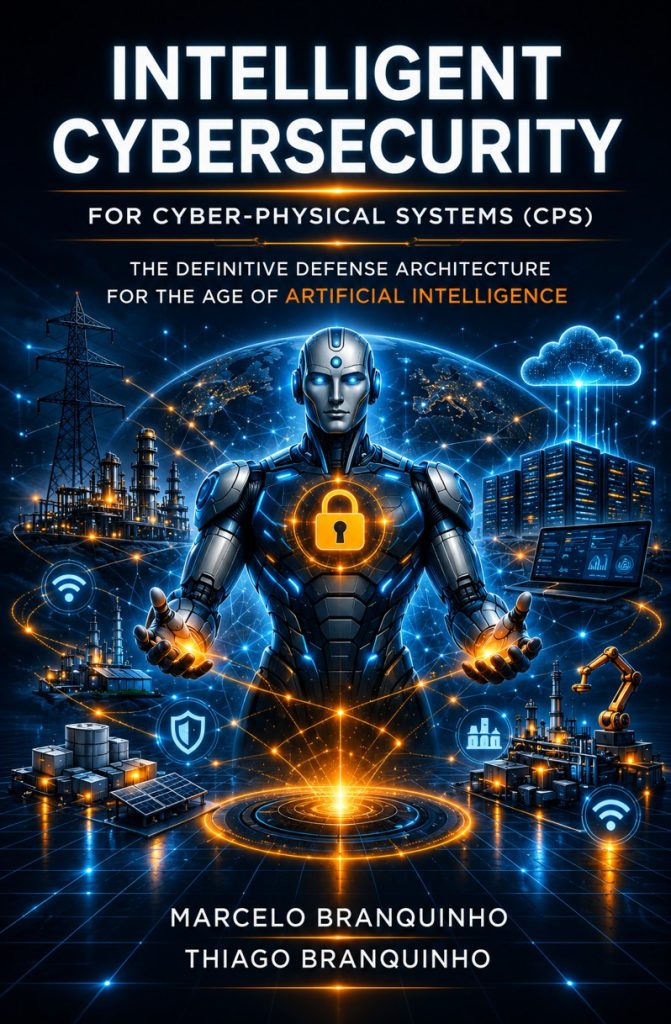
The Definitive Architecture of Defense in the Age of Artificial Intelligence
The next major global crisis may not begin with an explosion. It may begin with a line of code.
Critical Infrastructure in a Hyperconnected World
Power plants, hospitals, refineries, ports, financial systems, water networks, and supply chains have something in common. Today, all of them are operated by highly connected cyber-physical systems. As a result, the infrastructure that sustains modern society depends on the integration of software, industrial automation, sensors, networks, and artificial intelligence. When these systems are compromised, however, the consequences are no longer merely digital. They become physical, economic, and social.
When AI Also Becomes a Weapon
At the same time, artificial intelligence has come to be part not only of innovation, but also of the offensive arsenal. Today, attacks capable of learning, adapting, and simulating legitimate behavior are already part of the current landscape. Faced with dynamic, automated threats, traditional defense models become predictable. After all, they rely solely on static layers of protection — and that is no longer enough.
A Break from the Traditional Security Model
Intelligent Cybersecurity for Cyber-Physical Systems proposes exactly this break. The book presents a strategic and evolutionary approach to protecting critical infrastructure, one in which intelligence sits at the center of defense. The question the book raises is simple and decisive: if the attack learns, why should the defense remain static?
Throughout the book, the reader comes to understand why the classic security model has collapsed in the face of offensive AI. They also learn how to turn operational data into strategic decisions. Finally, they discover how to integrate technology, processes, and people into a truly adaptive security architecture.
The iCPS Model: Security as a Cognitive System
The book introduces the concept of iCPS (intelligent Cyber-Physical Security). In this model, security stops being a collection of isolated tools. Instead, it operates as an integrated cognitive system — one capable of correlating signals, anticipating risks, prioritizing impacts, and continuously learning from its environment.
Practical Applications in Strategic Sectors
The book offers practical applications across several sectors, including:
- Energy
- Oil and gas
- Mining
- Transportation
- Healthcare
- Agribusiness
- Manufacturing
- Government
In this way, the book shows how intelligent protection becomes a competitive advantage. It also shows how it functions as a pillar of operational continuity.
Who This Book Is For
This book is aimed at CISOs, risk managers, industrial engineers, executives, and technology professionals. It offers a clear framework for turning security into a strategic advantage.
The New Era of Adaptive Protection
In the age of autonomous systems, protection must evolve too. That’s why intelligent defense is not a trend — it’s the next stage of cyber-physical security. Welcome to the new era of adaptive protection.